Benny Pates, and Existential Wanderings

“Don’t panic.” (1)

My favorite part of Hitchhikers Guide to the Galaxy is when it’s discovered that the question to the answer of life, the universe, and everything is found in a giant computer called Earth, which of course, gets destroyed right before the computer can spit out the question. The irony of that whole scenario was hilarious to me. HHGG is hands down one of the quirkiest sci-fi books I’ve ever read, and if you haven’t read it yet, not gonna lie, I feel a little sorry for you.

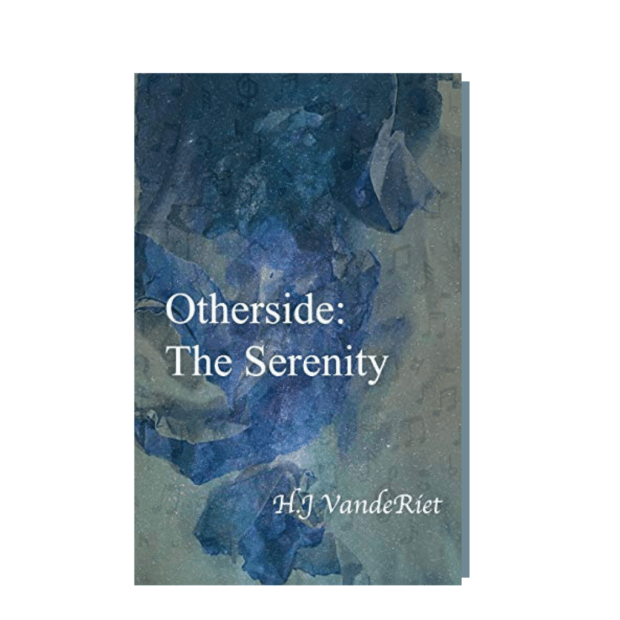
As I make my way through the core characters of Otherside: The Serenity, I find myself thinking a lot about who I was when I started this book, and who I am now. The book deals with a strange combination of beliefs, or thoughts, revolving around life, death, and the afterlife…and in the same way that it’s a journey for Alanis and her friends, it was a journey for me.
I won’t go into my faith journey here simply because I think that would be enough for a blog post all by itself, and I want to talk about another character today, but I will say this — it’s been strange. Which is, I think, an adequate way to describe my next character, Benjamin Pates (Benny).

I have a real soft spot for Benny. I don’t really know why, I just do. Maybe it’s because he’s weird, and I’m kind of weird, so I identify with the weirdness.

Benny is my ethereal character. He has a tendency to say things that make others go, “Okaaay…that’s an…interesting thing to say.”

He’s quirky, and he’s secure in the fact that he’s quirky. He doesn’t really worry or seem to care that other people may find him odd. Which again, I relate to because as a teen I spent a good portion of my time getting strange looks from people for saying weird stuff or doing odd things. He’s also quite mellow, and carefree. Very zen-like.

His parents, who we don’t formally meet in this book, run a hippie shop in downtown Sable, and also maintain the lighthouse, which is attached to their house.

The other thing that I think makes Benny an interesting and engaging character is that he’s blind, and has been blind since birth. So, writing Benny, and especially when it’s from his point of view, is always such a refreshing challenge as a sighted person because I have to imagine the world without my sight, and how one would experience it. When I describe how he moves through a room, for instance, I don’t use any descriptive words that a sighted person would use, because I want the readers to experience the way Benny walks through the world.

In the band, he plays the keyboard, and he loves to read. His introductory scene features him describing a book for a friend, who asks him to read it to her later because it’s in braille (you might notice there’s a slight nod to Hitchhikers Guide to the Galaxy/Dirk Gently’s Holistic Detective Agency here).

One of my biggest pet peeves when there’s a character who has some kind of disability is when they’re either (a) written completely helpless and hindered by their disability, or (b) the opposite, that they are perfect people who never make mistakes. I never want to portray Benny in either of these ways; he’s just a quirky kid, who like the rest of the group, loves his friends, and loves music. Because Benny is not a main-focus character, there are areas of his personality I’m looking forward to expanding on in the sequel that I didn’t get to in this book. I mentioned how much I love flawed characters in both my posts on Alanis and Aimee, and this is an area I’m really looking forward to exploring more with Benny.

I hope that in this book I captured Benny in such a way that you enjoy his wanderings, musings, and general oddities.

Next week, I’ll discuss the final character of Alanis’ core group of friends — Alaska Tension. Until that time, don’t panic, and don’t forget to bring your towel.

Otherside: The Serenity is currently available on AmazonYou can get the book in both Kindle and Paperback versions. If you have read the book, and would like to review it, you can do so on Amazon, and Goodreads.

(1) The Hitchhikers Guide to the Galaxy, by Douglass Adams, 1979
Paul Peterson, Please Kill Me

“20, 20, 20, 20, 4 hours to go,

I wanna be sedated

Nothing to do, Nowhere to go,

I wanna be sedated” (2)

I had a vision of myself in high school as being more against the establishment than I probably actually was, but I don’t think that’s uncommon for a teenager. I wore converses and an army jacket to school and somehow this made me believe that I was counter-culture. A more accurate representation of me going against the grain likely lies in the fact that I was a theatre, choir, Harry Potter nerd, and damn proud of it.

But I digress.

Punk Rock is the nihilistic outcry against a fascist two-party system

If you haven’t been able to tell from talking about Alanis, Josh, and Aimee, I have this love for writing characters who are different than myself. I also enjoy surly, unlikeable characters, who have a big heart. I think this may be the way I’d describe the next character from Otherside: The Serenity, Paul Peterson.

Paul is the bassist of White Clover. He’s my “angry” character. His favorite bands are of the punk persuasion: The Ramones, The Runaways, The Clash, and on the post-punk rock side, Nick Cave.

He has a real problem with authority, and he’s adamant about the band being true to who they are, and true to what rock music should be. He’s got this idea that they should rough it as a band, so that they don’t sell out. He’s that kind of musician.

He’s my darker character of the group — very sarcastic. You might even say he’s a borderline jerk, but I like him.

I like that he’s rough around the edges. Of the core characters, he’s the one I would say is the most withdrawn.

As far as his personal life is concerned, he doesn’t really talk about his parents. He doesn’t even like them much, because they’re the, “leave it to Beaver type,” and he’s not down with that kind of existence. This is where he aligns with Alanis and Josh, in that he believes music is their way out, and he’s determined to make it happen.

He just wants to do it on his own terms. And I think sometimes he doesn’t realize that there are other people in the band, too. He has to compromise, and that’s hard for him.

It’s not always going to look the way he thinks it should. The dynamic between Aimee and Paul was enjoyable to write, because they are stubborn and prideful, and want to make their own rules. There’s some great banter in the book I think you guys will enjoy. At least I think it’s funny, which I know is probably not saying a lot because I wrote it. So, you’ll have to let me know.

Otherside: The Serenity is currently available on both Amazon and online at Barnes and NobleYou can get the book in both Kindle and Paperback versions. If you have read the book, and would like to review it, you can do so on AmazonGoodreads, and Barnes and Noble.

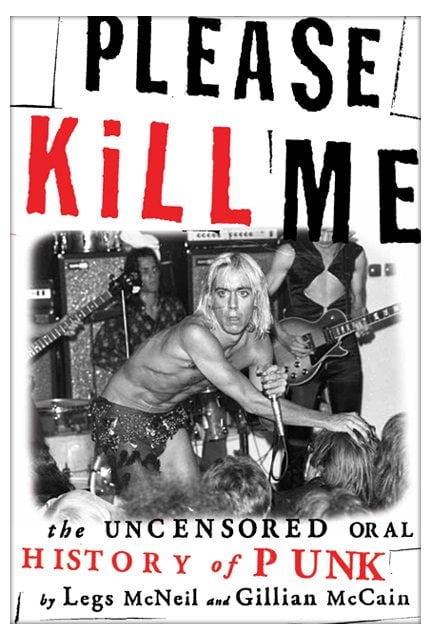
(1) “Please Kill Me” is not a request by the author, so don’t be alarmed. It’s a reference to the book, Please Kill Me: The Uncensored Oral History of Punk by Legs McNeil and Gillian McCain

(2) “I Wanna Be Sedated,” Road to Ruin, The Ramones, 1978

Aimee Jonson, and The Heart as an Organ on Fire

“Moments before sleep are when she feels most alive, leaping across fragments of the day, bringing each moment into the bed with her like a child with schoolbooks and pencils. The day seems to have no order until these times, which are like a ledger for her, her body full of stories and situations.” (1)

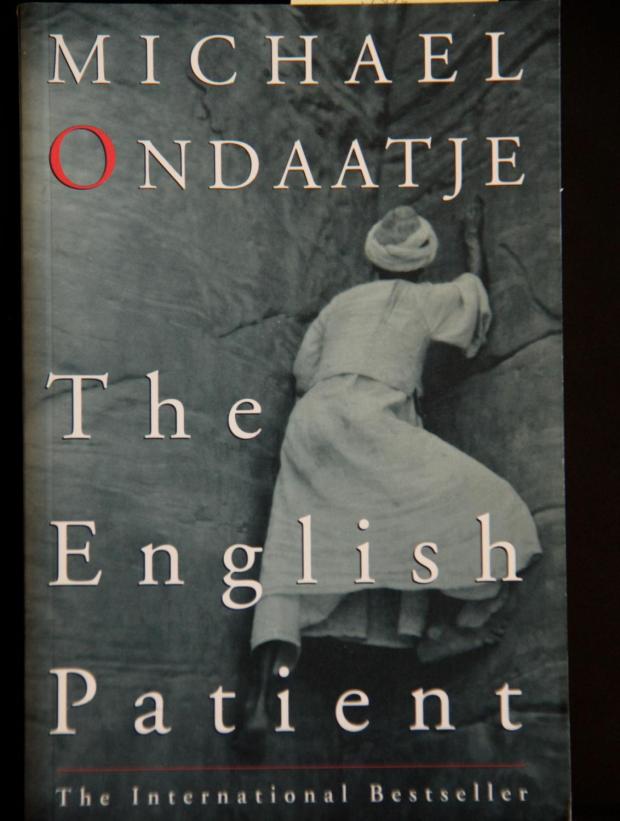
I got to meet Michael Ondaatje back in college. In case you don’t know, Michael Ondaatje is most famous as the author of The English Patient, which was also made into a movie, though he has written many other beautiful, wonderful works.

I was standing in line at the Starbucks on campus, and this older man was in front of me, taking his time. I was a young, very impatient college student who didn’t want to be late to class, because we were going to meet the author of the book we’d just read, a book I had fallen in love with. I kept shifting my weight and sighing irritably. Finally, he got to the register and ordered his drink, then stepped out of line.

I got to class and sat down next to my friend, complaining about the slow guy in front of me. A few minutes later, he walked in. It was Michael Ondaatje.

Needless to say, I wanted to crawl under my chair and stay there forever.

Fortunately for me, he either didn’t notice I was the impatient girl behind him at Starbucks, or he didn’t care. Either way, I got to sit in the presence of an AMAZING author and poet, one who I aspire to be like. There are still several Michael Ondaatje books I haven’t had the chance to read, but so far I’ve read The English Patient, Divisadero, The Collected Works of Billy the Kid, and Coming Through Slaughter.

His books often shift from time and place in a fluid motion, which for me is such a nice change of pace from the typical linear model of story telling.

One of the things I love most about Michael Ondaatje is the way he writes women. They are beautiful, complex beings, with immense depth. I also appreciate the way he writes their sexual agency, in that his descriptions are poetic, which makes sense, since he’s also a poet. It’s been my experience that men who can write women’s sexuality in a tasteful, beautiful way are rare. Unfortunately, most male writers I’ve read are more along the lines of THIS (Apparently, our breasts can react to a variety of situations, and we have a hard time peeing.)

I can’t give Ondaatje credit for Aimee Jonson though. While his books have certainly inspired me to write female characters in a different way, I always had a sense of who Aimee was when I started Otherside: The Serenity.

Aimee Jonson is Alanis’ best friend. She is so much fun to write because she’s who I identify with when I’m feeling a little snarky. But mostly, she’s the opposite of who I am as a person. So, it’s always fun to write a character who is the opposite of yourself. Aimee is unabashed — she’ll just say what she wants to say. She doesn’t hold back. She’s fearless and she loves to have fun.

She is more affluent than the rest of the group. Her parents have a big house outside of town. She’s also academically driven, and she has big dreams of going to a top college, of becoming a scientist. In this book, it’s mentioned that she wants to go to college, and in the sequel, I will explore more about the process of her making this decision, and how it affects her relationships with her friends.

She takes AP classes and she has extra curricular activities. Plus, she’s in the band with Alanis, Josh, and the others. She is the other guitarist in the band, and she sings back up.

Aimee’s got this punk rock spirit to her. I would also say she’s my most sex positive character. She’s very open about her sexuality, and she’s straight, but she’s not ashamed of the fact that she likes to have sex. I wouldn’t classify it as her defining characteristic, but it puts her in her own category, aside from the other girls in the group. It introduces a conversation about what it’s like to be a girl in a small town who has a strong personality, and you get the reaction from her friends and the people around her because of her openness. I think there’s some good conversations that can come from that.

Next week, I’ll tell you about Paul Peterson, White Clover’s bassist and rebel, along with some other rebels who I’ve always been fond of reading.

Otherside: The Serenity is currently available on both Amazon and online at Barnes and Noble. You can get the book in both Kindle and Paperback versions. If you have read the book, and would like to review it, you can do so on Amazon, Goodreads, and Barnes and Noble.

(1) The English Patient, Michael Ondaatje, 1992


Joshua Linestone, And a Little Madness

“I saw the best minds of my generation destroyed by madness.” (1)

I’ll be honest…I forget exactly when I discovered Howl by Allen Ginsberg. I want to say it was in high school, but I don’t remember if I found it in the school’s library, or if I went to the local library and found it there. Either way, I read Howl, and was blown away. At the time, I didn’t understand most of what was being said in the poem. Mostly, I loved the rhythm of it, and the fact that there were cuss words in the poem that made me feel like a rebel for reading it, but eventually as I learned about the Beat Generation, and about Allen Ginsberg specifically, much of it started to make more sense.

Allen Ginsberg is a big reason why I looked into Naropa University, where I earned my Master’s degree in Writing. I wasn’t sure how I would feel about going there; it’s a Buddhist inspired university, focusing on mindfulness and expanding consciousness, as well as activism, emphasizing contemplative learning — but I wasn’t sure the style of learning would be beneficial to me, or how this would impact me since I’m a follower of Jesus. Basically, I was quite ambivalent.

I ultimately prayed about it and received an answer that I should go, for even Jesus’ disciples walked in places with non-believers, and why should I be any different? Some of the best ways we grow in our faith is by being challenged in circumstances outside of our comfort zone. A chance to challenge what I believe about myself as a writer and believer. A chance to grow in my identity.

While “Howl” addresses topics some people might find offensive (and actually they did, so much so that Allen Ginsberg was put on trial for this poem), the poem is ultimately a reflection of how disoriented an entire generation felt, grappling with identity and questioning everything they’d been led to believe.

When we’re faced with a paradigm shift, it’s difficult to process. There’s a level a grief that exists between who were were before the shift, and who we might become if we keep moving through it, and eventually beyond it.

I think in some ways this is what Joshua Linestone is dealing with in Otherside: The Serenity. He experiences a profound shift in his life, one that he feels responsible for, and he isn’t sure how to move forward through it.

Joshua Linestone

Josh is the lead guitarist for White Clover, and he’s Alanis’ boyfriend. I talked about Alanis more in my previous blog post. Josh and Alanis have much in common, having grown up together, and they’re very compatible. One place where they identify with each other is that their home lives are similar, though with Josh, his relationship with his dad is much more amicable.

Like Alanis, Josh dreams of the band making it big and of getting out of Sable. If I had to pick his most defining feature, I would say it’s his desire to leave with Alanis. More importantly though, he is sweet, he loves Alanis, and they’re kind of silly together.

He takes care of her. I think that he’s probably like a lot of 16 year old boys in that his first love is a BIG DEAL and he’s quite protective of her, which is probably obnoxious at times. You get to see the effects of that in their relationship, and it’s really hard.

The challenge for Josh comes when things don’t go the way he had envisioned and planned, and he has to adjust to a world that has completely shifted. In this first book, the storyline between Josh and Alanis is very interwoven. If I had to pick another main character in this book after Alanis, it would probably be Josh. We get a lot of the story from his perspective.

Next week, I’ll tell you about Alanis’ best friend — Aimee Jonson, also a guitarist of White Clover! And I’ll talk about one of my favorite authors — Michaeal Ondaatje.

Otherside: The Serenity is currently available on both Amazon and online at Barnes and NobleYou can get the book in both Kindle and Paperback versions. If you have read the book, and would like to review it, you can do so on AmazonGoodreads, and Barnes and Noble.

(1) “Howl,” Allen Ginsberg, 1956